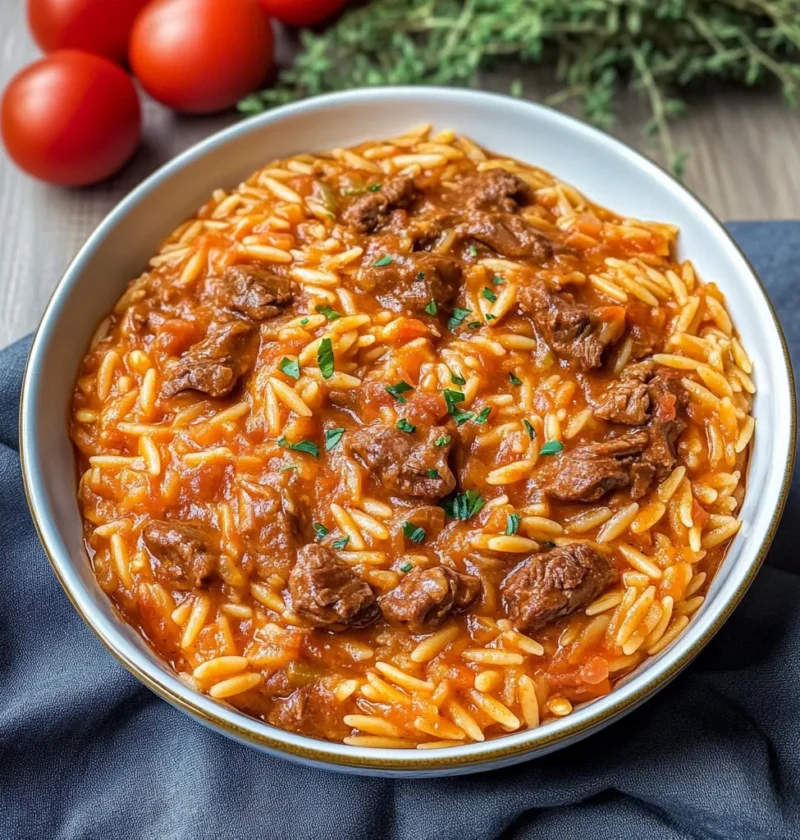
Some dishes don’t just feed you—they tell a story. Giouvetsi, a classic Greek beef stew with orzo, is one of those meals that carries generations of tradition in every spoonful. In many Greek homes, this dish is reserved for Sundays, special gatherings, or moments when family and food come together in the most meaningful way. The aroma alone—slow-simmered beef, warm spices like cinnamon and nutmeg, and rich tomato sauce—has a way of filling a home with comfort before the meal even begins.
What makes Giouvetsi truly special is its balance. It’s hearty but not heavy, richly flavored yet elegant. The tender beef melts into a tomato-based sauce infused with spices that might surprise you if you’re new to Greek cuisine. Cinnamon in a savory dish? Absolutely—and it works beautifully. Finished with orzo cooked directly in the stew and a generous sprinkle of grated cheese, Giouvetsi is a one-pot meal that feels both rustic and refined.
Whether you’re exploring Greek cooking for the first time or revisiting a beloved classic, this dish delivers warmth, depth, and soul in every bite.
Recipe Overview
Giouvetsi (Greek Beef Stew with Orzo) is a slow-simmered beef stew made with tomatoes, aromatic spices, and tender orzo pasta cooked directly in the sauce. Traditionally finished with grated Kefalotyri or Parmesan, it’s a comforting, flavorful one-pot meal that represents the heart of Greek home cooking.
Ingredients & Instructions
This dish relies on simple ingredients layered with technique and patience. Below is a detailed walkthrough with helpful tips to ensure perfect results.
Ingredients
- 2 tablespoons olive oil, divided
- 1½ lb diced beef (chuck or stewing beef works best)
- 1 large onion, diced
- 4 garlic cloves, finely chopped
- ½ cup red wine
- 2 tablespoons tomato paste
- 1 can crushed tomatoes
- ½ teaspoon ground nutmeg
- 2 bay leaves
- 1 cinnamon stick
- 2 cups chicken stock (or beef stock)
- 2 cups orzo
- ½ cup grated Kefalotyri or Parmesan cheese
- Salt, to taste
- Freshly ground black pepper, to taste
Step-by-Step Instructions
1. Brown the Beef
Heat 1 tablespoon of olive oil in a heavy-bottomed pot or Dutch oven over medium-high heat. Add the diced beef in batches, seasoning lightly with salt. Brown the meat on all sides until it develops a deep, golden crust. This step builds flavor, so don’t rush it.
Once browned, remove the beef from the pot and set it aside.
Tip: Avoid overcrowding the pot—crowding causes steaming instead of browning.
2. Sauté the Aromatics
Add the remaining 1 tablespoon of olive oil to the same pot. Toss in the diced onion and cook until soft and translucent, scraping up any browned bits from the bottom. Add the chopped garlic and cook for another 30 seconds until fragrant.
3. Deglaze with Red Wine
Pour in the red wine, stirring to deglaze the pot. Let it simmer until most of the liquid evaporates. This step adds depth and richness while mellowing the wine’s acidity.
4. Build the Sauce
Stir in the tomato paste and cook for a minute to deepen its flavor. Add the crushed tomatoes, nutmeg, bay leaves, and cinnamon stick. Stir until everything is well combined.
5. Simmer the Stew
Pour in the chicken stock, return the browned beef to the pot, and bring the mixture to a gentle boil. Reduce the heat, cover, and simmer for 60–90 minutes, or until the beef is fork-tender and the sauce has thickened.
Tip: Low and slow is key here—this is where the magic happens.
6. Remove Whole Spices
Once the beef is tender, remove and discard the bay leaves and cinnamon stick. Their flavor will have fully infused the sauce.
7. Cook the Orzo
Stir the orzo directly into the stew. Cook uncovered, stirring often to prevent sticking, until the orzo is tender and has absorbed some of the sauce. Add more stock or water if needed to maintain a saucy consistency.
8. Finish with Cheese
Stir in the grated Kefalotyri or Parmesan, allowing it to melt into the stew. Taste and adjust seasoning with salt and freshly ground black pepper.
Serve hot, with extra cheese on top if desired.
Cooking Tips & Variations
1. Choosing the Right Beef
Chuck roast or stewing beef is ideal for Giouvetsi. These cuts become tender during long cooking and absorb the flavors of the sauce beautifully.
2. Spice Balance
The cinnamon and nutmeg should be subtle, not overpowering. They add warmth and depth without making the dish sweet.
3. Cheese Options
Kefalotyri is traditional and adds a salty, sharp finish. Parmesan is a widely available and excellent substitute. For a creamier finish, mix in a bit of grated Pecorino Romano.
4. Oven-Baked Variation
Traditionally, Giouvetsi can be finished in the oven. After adding orzo, transfer the pot to a 350°F (175°C) oven and bake until the pasta is tender and the top is slightly caramelized.
5. Lamb Giouvetsi
Swap beef for lamb for a deeply traditional version. Lamb pairs beautifully with the cinnamon and tomato sauce.
6. Make It Ahead
Giouvetsi tastes even better the next day. The flavors deepen as it rests, making it perfect for meal prep or entertaining.
Storage & Serving Suggestions
Storage
- Refrigerator: Store leftovers in an airtight container for up to 4 days.
- Freezer: Freeze without the orzo for best texture. Add fresh orzo when reheating.
Reheating
Reheat gently on the stovetop with a splash of stock or water to loosen the sauce. Stir frequently to prevent sticking.
Serving Suggestions
- Serve with crusty bread to soak up the sauce
- Pair with a simple Greek salad for freshness
- Add a glass of dry red wine for a complete Mediterranean experience
Giouvetsi (Greek Beef Stew with Orzo) is the kind of dish that reminds us why traditional recipes endure. It’s comforting, deeply flavorful, and made to be shared. From the tender beef to the aromatic tomato sauce and perfectly cooked orzo, every element works in harmony to create a meal that feels both nourishing and celebratory.
Whether you’re cooking for family, friends, or simply yourself, Giouvetsi brings warmth to the table and soul to the kitchen. One pot, simple ingredients, and a little patience are all it takes to experience a true classic of Greek home cooking.
FAQs
1. Can I make Giouvetsi ahead of time?
Yes. It tastes even better the next day. Store in the fridge and reheat gently before serving.
2. Can I use beef stock instead of chicken stock?
Absolutely. Beef stock adds even deeper flavor.
3. What if my orzo absorbs too much liquid?
Simply add more warm stock or water and stir until the desired consistency is reached.
4. Is Giouvetsi traditionally baked or stovetop?
Both methods are traditional. Stovetop is more common for home cooking, while oven-baked versions are often used for gatherings.
5. Can I make this dish gluten-free?
Yes—replace orzo with a gluten-free pasta or rice added at the end.
Giouvetsi is a classic Greek beef stew with orzo, slow-simmered in a rich tomato sauce with warm spices and finished with cheese for the ultimate comfort meal.